
Mulching 101.
Mulching serves several purposes that are critical for any garden project, whether it be a small scale home garden or a large scale commercial or council project for public spaces. Mulch is very important to both the short and long-term survivability of gardens and greenspaces. If conditions are not suitable, then trees and plants will not be able to establish themselves and will die-off, or will be constantly weakened by a lack of water and nutrients and will be under constant threat of pathogenic incursions.
For more information about soil biology, click the button below.
Our page on Soil Microbiology explains how soil works in more detail if you are interested to dive in deeper about this particular topic.
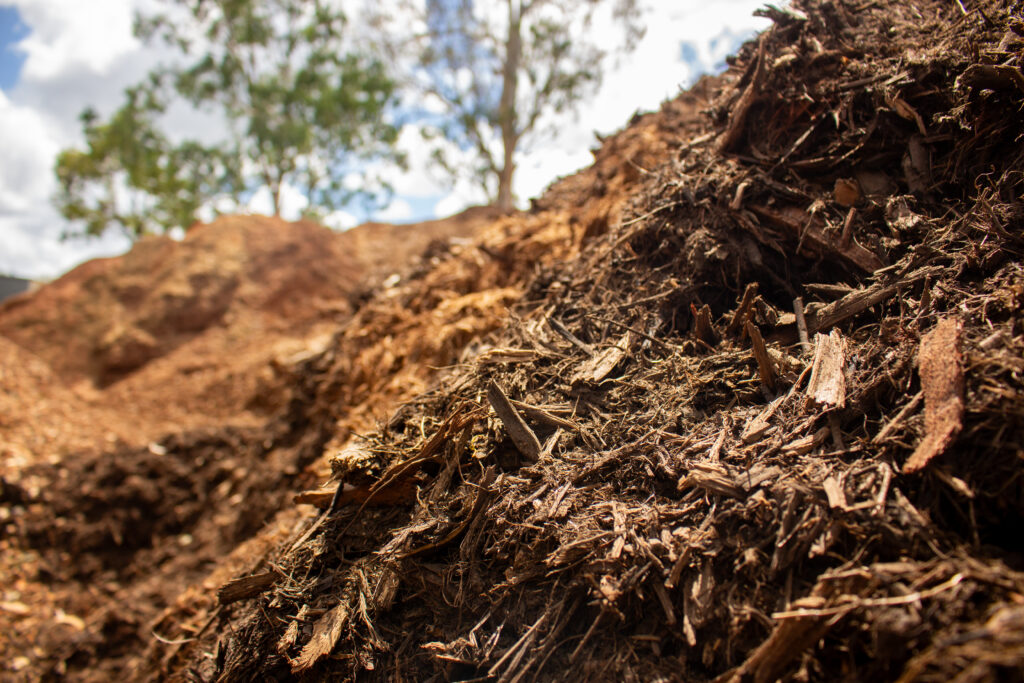
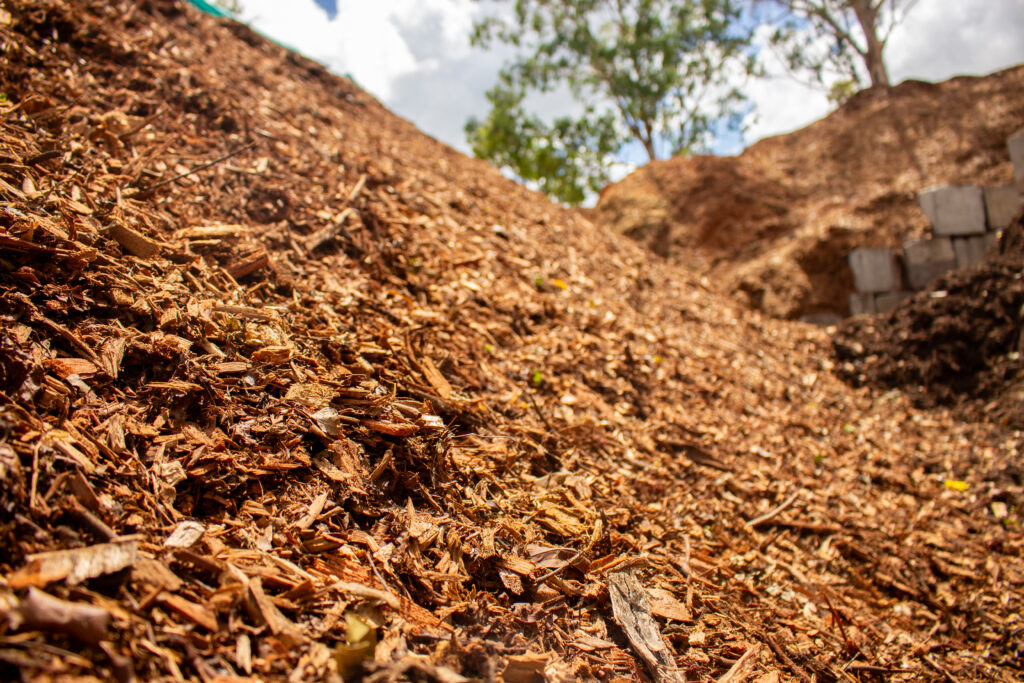
So what does mulch actually do? Mulch adds a protective and insulative layer to the top layer of soil which protects it from damaging UV radiation and excessive evaporation, especially in the hot and dry summer months. Both of these can be extremely harmful towards the overall health of fresh plantings.
Furthermore, mulch also acts as a fantastic deterrent against weed growth around freshly planted, and fertilized, trees and plants. The mulch layer blocks light from reaching the garden bed, preventing the germination and proliferation of weed seeds from spreading, thus reducing the amount of water and nutrients absorbed by unwanted plants.
As the mulch breaks down it also introduces fresh nutrients and improves the bio-diversity of the pre-existing soil layers, which is often vital for the sterile soils found in urban residential properties.
The Different Types of Mulch.
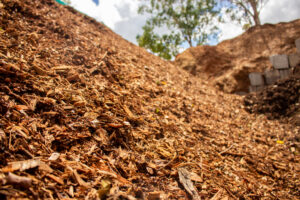
Shredded Forest Mulch
Our only saleable product, Forest Mulch is 100% naturally sourced from our various tree care & management jobs. Forest Mulch is one of the most versatile mulches available on the market, best used in garden beds around trees and shrubs. It is highly resistant to water runoff during periods of high-rainfall, making it useful for retention on hillsides and slopes.

Green Waste Mulch
Also known as compost, Green Waste Mulch is often sourced from green and brown organic materials, such as fresh food scraps and unprocessed organic waste that are blended and allowed to decompose. It is not suitable as a top-layer of mulch but more as a fertilizing/mulch blend that can perform both jobs to an adequate degree. This particular mulch is most often blended into the top layer of soil before being reapplied but can also be used as a top layer itself.

Wood-Chip Mulch
Wood chip mulch is often sourced from branches, stumps and wood waste from construction/demolition jobs. Despite the risk of containing potentially harmful chemicals such as asbestos, Wood Chip Mulch takes longer to decompose then other mulches and is also highly resistant to being washed out by extreme weather events, making it suitable alternative to shredded bark despite the risks.
Looking for Mulch?
Skip the middleman and get premium quality, dry aged mulch straight from the supplier for as low as $15 per cubic meter.
