
For a professional cabling and bracing service in South East Queensland, give us a call for a free quote TODAY! Free Call: 1800 353 053 OR (07) 3715 5444
What is Tree Cabling and Bracing?
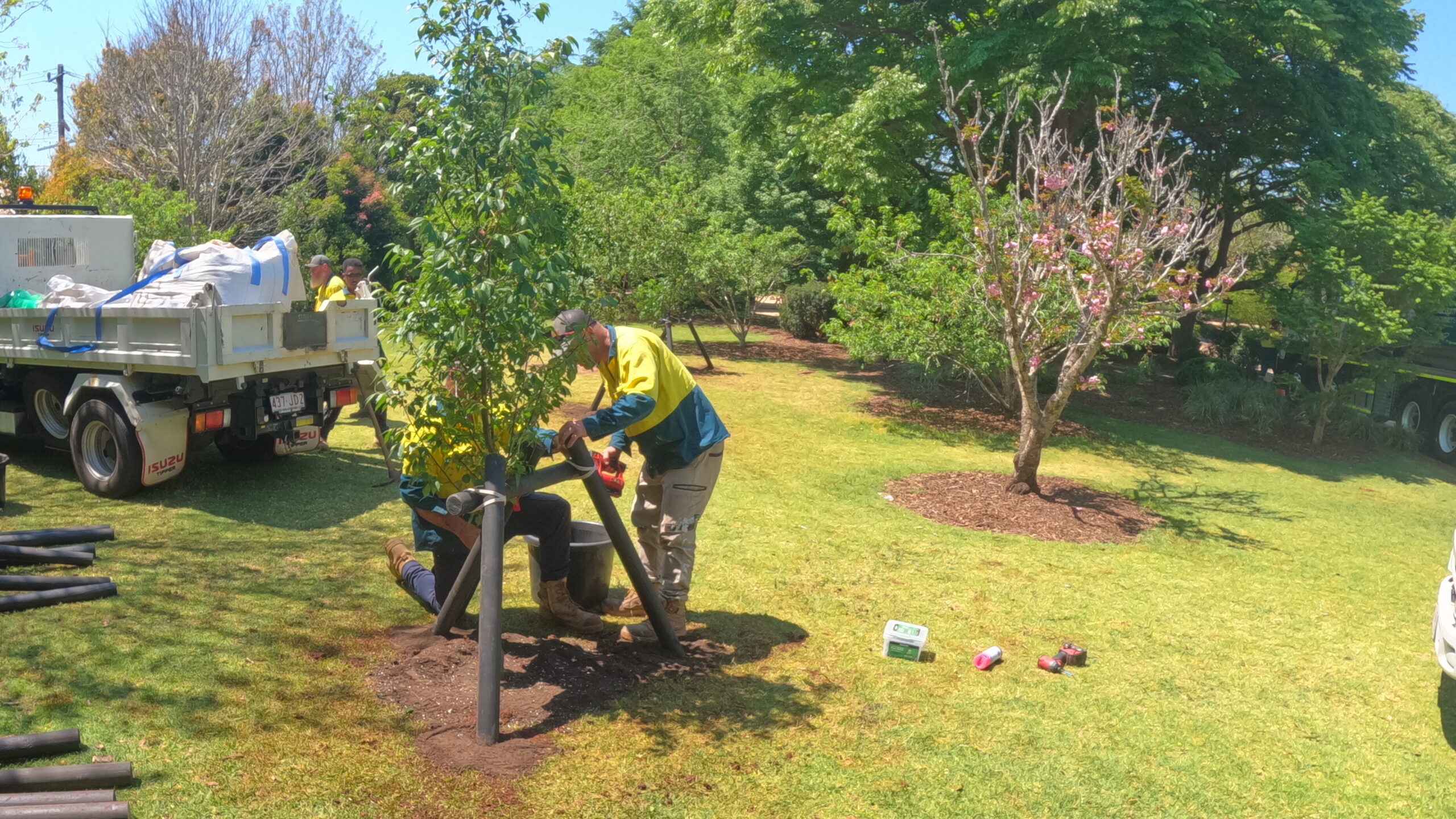
Arborists use cable and bracing to support trees that are vulnerable to structural collapse or failure. This is particularly common in mature, multi-trunked trees and trees with open canopies. Correctly fitted cables and bracing help redistribute the load of the canopy, allowing limbs to support each other.
The Benefits of Tree Cabling & Bracing
Reduced Likelihood of Structural Failure.
Tree Bracing reduces the likelihood of structural failure in trees of poor health or heavy, overburdened limbs. This has the added effect of also prolonging the life of mature trees, in particular ones of cultural or historical significance.
Reduction of Hazard Potential.
Tree bracing and cabling can significantly reduce the hazard risks for nearby pedestrians and property alike, allowing trees to remain without the necessity of further pruning or removal.
Stabilisation of Weak or Split Trunk Trees.
Bracing is an excellent strategy when it comes to supporting weak or split trunks that have large amounts of weight pulling them down. Bracing and cabling can help alleviate these problems and allow a tree to remain healthy and strong.
Support for Overweight Limbs and Branches.
Depending on the species of trees, sometimes the canopy can become too heavy for the limb to support itself and this can pose risks to both pedestrians and property around it. Tree cabling can help hold an overloaded limb upright, especially as a method of holding out until pruning can lighten the load.
Tree Health Problems
If you think that one of your trees is a candidate, then it is time to get a Certified Arborist to assess it.
Surfacing Cracking/Splitting.
The appearance of cracks or lesions on the surface of the tree, especially around failure points, could indicate an issue with the structural integrity of the tree limb.
Steep Crotch Angles.
Steep crotch angles are far more prone to failure then narrow angles, as they are less capable of supporting heavier weights.
Bark Inclusion.
Bark inclusion create weak points in the tree which increases the risk of structural failure on nearby limbs. Tree cables can reduce the impact of inclusion on the structural integrity of the tree.
Tree Subsidence.
Tree subsidence occurs when tree roots absorb too much moisture from clay-based soils, causing the ground to shrink and potentially weaken the structural integrity of the tree itself.
The Solution
If the problem is identified in time the tree can be cabled and braced using steel rods to provide rigid support and steel or synthetic cables to restrict movement. They are intended to limit the movement of the supported branches so they are less to fail during storms.
Checklist
- Book a qualified Arborist to assess your tree.
- Ensure the tree is professionally pruned before any cabling and bracing occurs.
- Once the cable and bracing has been fitted it needs to be inspected from the ground once per year as it is subject to the elements. There should be a climbing inspection every 5 years by a qualified Arborist.
Please call us for a free quote TODAY! Free Call: 1800 353 053 OR (07) 3715 5444
Preferred suppliers